

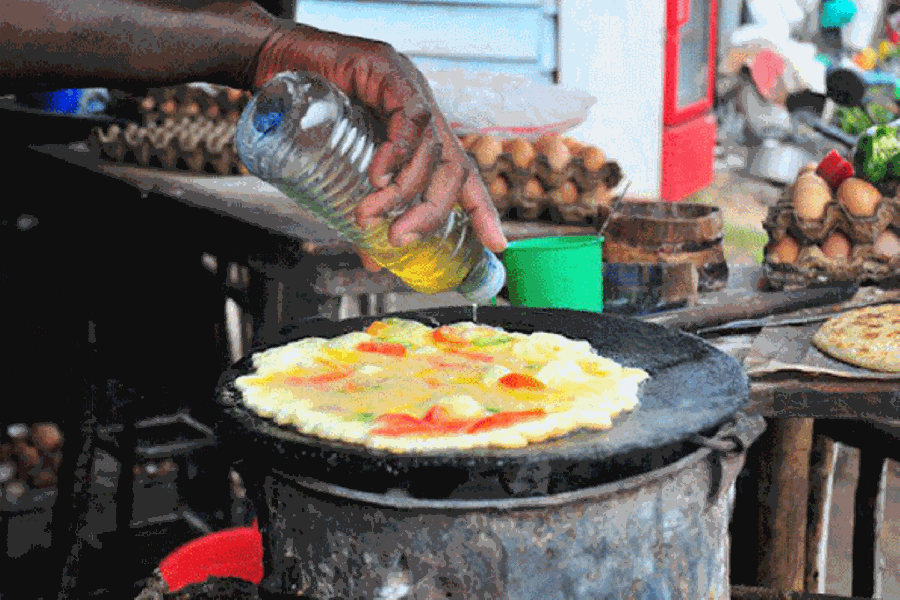
A new study has found that nearly 90 percent of cooking oil used by street food vendors in Kampala and Wakiso is unsafe, raising alarm over food safety and public health, particularly for urban workers and schoolchildren who rely heavily on street food.
The findings were presented on Wednesday during a national multi-stakeholder dialogue on food safety organised by the Ministry of Health in partnership with the CASCADE project and development partners at Serena Hotel.
Damali Ssali, the Country Director of the Global Alliance for Improved Nutrition, said the study conducted by Makerere University assessed 150 street food vendors selling popular foods such as chapati with fried eggs, chips, fried chicken, fish and samosas.
She said the research found that the oil itself was the main source of risk, largely because it is repeatedly reused beyond safe limits.
“We found that almost 90 percent of the cooking oil was toxic because it is reused over and over again. The food itself is not unsafe, but it becomes unsafe because of the oil,” Ssali said.
She added that some vendors were reportedly mixing transformer oil into cooking oil to extend its usability, a practice she warned poses serious health dangers.
Ssali cautioned that the health effects of consuming food prepared with degraded oil accumulate gradually and could place enormous pressure on health facilities in the future.
“If we do not protect our productive workforce, then our economic growth ambitions will remain out of reach,” she said.
The Ministry of Health said food safety remains a significant challenge, particularly within the private sector, which handles the bulk of food consumed in the country.
Charles Olaro, the Director General of Health Services, said more than 75 percent of food in Uganda passes through private service providers, making regulation and enforcement difficult.
“Food safety is a critical concern in Uganda’s nutrition landscape, especially when it comes to private service providers, because over 75 percent of food passes through the private sector,” Olaro said.
“This dialogue is about finding practical solutions that protect our most vulnerable populations,” he added.
Immaculate Yossa, the CASCADE Consortium Manager, said unsafe food compromises efforts to address malnutrition and the growing burden of non-communicable diseases.
“There are more than 200 diseases linked to foodborne infections, ranging from diarrhoea to cancers,” Yossa said. “If Uganda is to achieve human capital development, then safe, nutritious food must be a priority.”
During a panel discussion, Agnes Taaka, the Woman Member of Parliament for Bugiri District, said Parliament has already tabled the Food and Nutrition Bill to strengthen oversight of food safety.
“The Bill will help clearly define responsibilities among stakeholders and establish an authority to oversee food and nutrition in the country,” she said, adding that it is awaiting a certificate of financial implication.
The dialogue brought together officials from central and local government, researchers, private sector actors and development partners, who called for increased consumer awareness, responsible vending practices and coordinated enforcement to improve food safety in urban areas.
